Author: Senska Madgscherly O’DONNELL, MBA

  • Haiti Unveiled: Confronting Racism’s Impact with Compassion

    Haiti Unveiled: Confronting Racism’s Impact with Compassion

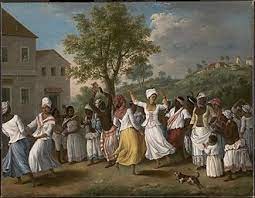
    Haiti’s history reveals the enduring impact of racism, from rejecting slavery to grappling with forgotten pain, as seen through the lens of Black American voices and struggles.

    Our biggest issue in Haiti is that we gained our independence so long ago that we have forgotten the pain of our ancestors because they are gone too long. What gets lost in time takes time to recover, the art of archeology and historians.

    Haiti, for being the first black country, paid a huge price, and it is because the white people did not like or appreciate the idea of a black nation equal, and they sabotaged every plan of the First Black Nation. Dessalines says anyone who shakes a white politician’s hands just sold the first black nation because the white nation will never ever want the best for us and is not generous. And our government heads did shake the hands of many Western leaders throughout history, and they sacrificed our ancestors every time they did.

    What we did not know in Haiti is that many countries in Africa were and are still under the law of the British, Americans, and the French; why did we expect every deal would be good for us during the era of racism?

    During my recent trip to Haiti, I saw a still naive population, as outside of our country, people face as much good and bad, and we receive everyone with hospitality until they prove us right or wrong. Coming back from Haiti, I am saddened by the naivete and what the TV does to us. The mulates live in a place that looks like a California suburb, and the blacks mostly live in metal sheets or unfinished cement houses. The revolution was the mulates and blacks against the whites. Before that, the blacks tried to start a revolution, but when the mulates joined, we won the war, and we defeated the biggest army that ever existed in the world.

    Now, what the blacks didn’t know is that mulates (who are proud to call themselves mulates; I was surprised in America, black Americans do not like to be called mulates) also had their biases that also call themselves white and do not consider themselves as black. They monopolized every part of the industry to avoid the blacks from taking part in the wealth opportunity; how did they do that? I don’t know if they learned the system well enough through generational wealth and hate (mulates against blacks); besides that, they control the main political parties. When Jovenel started speaking out about those things, he was assassinated, and still, the population on the ground do not know what is going on during the investigation. We, the diaspora, are still not clear about the assassination because the US got involved. We do not understand why America feels the need to take over.

    The system in Haiti was established through the racism era; we will need to open our eyes about where we came from to undo everything. I am so grateful for black Americans’ voices and So grateful to Martin Luther King today. Ancestors lived through kidnapping taken away from their lands and emotional, mental, physical, and financial torture.

    They are our heroes. Today, many black people feel and stand as equal to white people because today, still, many people in Haiti still feel inferior to white people.

    We live in a world of evil and good people; do we have a great mix? We do not know. We, in Haiti (Africa) believe that if you are different, it is okay to act differently and see things differently. But unlike in the mind of the Westerners, they seem as not OK because they believe normal means good, while normal is cultural.

    Happy Martin Luther King Day! Keep sharing your story to remind other black countries what we stand against.

    #MLKD #MLK Womenful Voice #BLM #haiti #women #ancestors #black #enslaved #slavery #segregation #war #rascim #independence
  • My experience with Women Ambassador Forum

    My experience with Women Ambassador Forum

    Hello World,

    In the last few months, I’ve experienced immense growth. I used to tell myself that I was too sensitive, always trying to focus on the positive side of every negative moment. It was a coping mechanism that kept me moving forward. However, after my most recent setback, I decided to channel my energy into my purpose and not let myself fall back into a deep depression. Life has a way of working things out perfectly.

    A few months ago, I applied to become a women’s ambassador, and while I was in Uganda, I received the news that I had been accepted. The timing couldn’t have been more perfect. The forum that followed was life-changing; it left me feeling wiser, inspired, motivated, hurt, and ultimately, empowered. Men and women from different backgrounds shared their stories, emphasizing how proactivity can truly change the world for the better.

    Throughout the forum, I gathered and created several quotes to guide not just myself but also those around me:

    Maria Fernandez Espinoza: “Open doors for girls and train them to be better.”

    Ali Mustafa: “Start today; the big goals can distract you. Small goals lead to big goals.”

    Michelle Meza: “Don’t just be an activist; be a strategic activist.”

    Maria Freitas: “Millennials have lived through crises, which makes them real and vocal.”

    We discussed changing the picture of what a leader looks like and agreed that every voice matters. Older generations were more submissive and adhered strictly to rules, but millennials are changing that.

    How to Get the Right Mentor

    Karin Heinzl offered great advice:

    • Be continually thankful.
    • Be prepared.
    • See yourself as an activist.

    Your Voice Matters – make a difference first.

    Melene Rossouw shared, “Speaking out is being an activist.” Mapping and activating an advocacy network were also critical topics we explored, especially the differences between developed and underdeveloped countries.

    Ali Matalon reminded us to “Use the fire in your belly, be vulnerable, activate your network, and make things happen.”

    Pathway to Influence

    Dr. Faith Mwangi-Powell emphasized that “The goal is bigger than individual interest; lose the ego.” She reminded us that our causes should be collective, not personal.

    Uzma Gul’s story was especially touching. She spoke of always seeing the light at the end of the tunnel, despite how dark things might get. Her words resonated deeply with me:

    • “Weak men with big egos will always create trouble for you.”
    • “Whatever happens should not stop you from helping others raise their voices.”
    • “You always have the power. Don’t let anyone stop you from your happiness and your dream.”

    Her journey helped me understand my hardships in life. I love my country, and being an immigrant in the U.S. hasn’t weakened my connection to it. I can return to Haiti, help, and empower others. But for Dr. Uzma, her story is different. She was abducted, yet seeing the hope and light in her eyes reminded me how much I can still do.

    Social Return on Investment

    Crystal Bailes said, “Impact investment is not about making money but about creating healthy communities.” This idea challenges traditional perspectives on investment, urging us to think beyond numbers.

    The Art of Failing

    Rocio G. Turner made it clear that our success is built on our past, which inevitably includes failure. She urged us to share our stories so they don’t get lost in the mess of life.

    Becoming a WAF Ambassador

    Najma Mohammed shared the stigma around mental health, often seen as a weakness in one’s faith. Sara Minkara taught us that our eyes are significant assets but can also be tools of prejudice.

    I’m Speaking: It’s Your Turn to be Heard

    Terri Trespicio boldly declared, “It’s one thing to speak up; it’s another to be heard.” Women have been told there isn’t enough space for them, but it’s time to challenge that.

    Pursuing Your Passion: The Importance of Doing What You Love

    Azure Antoinette encouraged us to think about our future, not just today.

    Being the Representation I Couldn’t Find

    Tiffany Yu reminded us, “If there is no mirror, be the mirror.” Even if you’re the only one in the room, there is a community behind you.

    The Border to a New Beginning

    Muzna Dureid shared the realities faced by girls who are forced into marriage because of war. Her strength in facing such challenges was incredible.

    Building and Scaling Your Work

    Josh Danesforooz and Jill Goldenziel shared insights on creating boundaries, writing boldly, and expressing your true self.

    The entire conference was filled with moments of inspiration that I will carry with me. I also met a young girl named Fatima Nasir, who taught me an invaluable lesson. Her mother was her role model, and she said, “It is the role of every mother to instill confidence in her children.”

    There were many parts of this experience where I was so moved that I forgot to take notes. Each session was impactful and has left me feeling more capable and ready to make a difference.

    Let’s make a change.

    Senska Madgscherly Jean