Author: Senska Madgscherly O’DONNELL, MBA

  • The forgotten warriors of the Haitian Revolution: Women Who Fought the War Within

    I have been taught that revolutions are fought on battlefields with muskets and declarations. But I am learning that the most profound war is the one waged in silence, much more profound, within the soul of a people who have been told they are not people. It’s the battle to believe you deserve to be free in the first place, especially when the entire world is built to convince you otherwise. My journey into the story of the Haitian Revolution taught me that before there could be a free Haiti, there had to be free Haitians, and that liberation is an inside job.  I am learning about the Haitian Revolution, and it has taught me that before a single shot was fired for freedom, a more crucial victory had to be won. It was a war for the mind, a war for the spirit, a war to believe, against all evidence, that you were born to be free. This was the “war within,” a spiritual and psychological insurrection where the very idea of a free self was forged in the hearts of the enslaved. This was the first front of the revolution, and it was led by women whose stories have been whispered, but whose impact echoes through history.

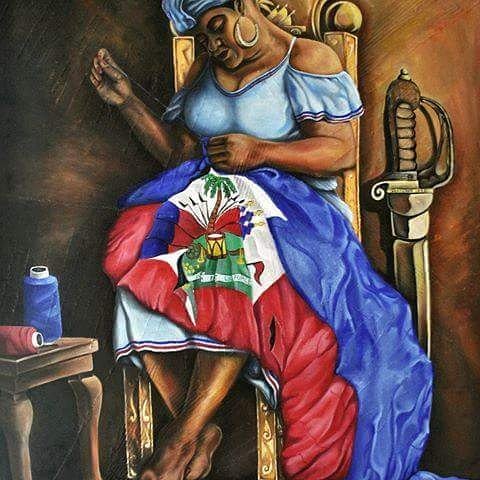
    We have forgotten the architects of this inner rebellion. We remember the generals, but we have overlooked the women who were the master strategists of this internal war. I think of Cécile Fatiman, a Vodou priestess who stood in a sacred circle and, through divine possession, performed a miracle of the mind. In that moment, she did not just give a speech; she channeled a divine power. She replaced the master’s deity of submission with an African spirit who commanded freedom. She didn’t just organize a revolt; she decolonized God. She replaced the image of a white God who sanctioned chains with an African spirit who commanded liberation. She performed a spiritual surgery, cutting out the lie of their inferiority and implanting a sacred truth: your freedom is a divine right. Her ceremony was the moment they stopped being enslaved people, hoping for freedom, and became free people ready to claim it.

    Article content
    The Priestess who decolonised the mind and the soul. She liberated the mind and spirit of a nation.

    But a free spirit needs a body that acts free, and that’s where the story turns outward. I am in awe of Sanité Bééélair, a warrior who took that inner freedom and wore it on her body like armor. When she was captured and sentenced to die, the French commanders tried to strip her of her dignity, ordering her to be hanged like a common criminal. But she refused. She looked her executioners in the eye and demanded to be shot as the soldier she was. In that defiant act, she screamed to the world that her body was her own sovereign territory. Her final act was a declaration that her body was her own sovereign nation. She proved that the victory won in the spirit must be made real in the flesh, even if it costs everything.

    Article content
    A woman who turned her inner freedom into fearless action. Her body being her own sovereign nation, even in the face of death

    And we must also remember the women who show us that this inner freedom is a force that can inspire armies. This is where I find Marie-Jeanne Lamartinière, a figure who seems to step out of a legend. She didn’t just fight in the battles; she transformed them. They say she fought in the front lines at Crête-à-Pierrot, wearing a uniform of a male officer, her courage a dazzling beacon amidst the chaos. But her power was in her rifle and presence. Fearless and unwavering, she became a living symbol by standing there. She was a walking, fighting testament to the “war within” made manifest, boosting the morale of her fellow soldiers and proving that the commitment to liberty was universal, transcending gender and role. She was the spirit of Bois Caïman and the defiance of the execution scaffold, all channeled into the heat of battle.

    Article content
    Her presence turned battlefields into symbols of possibility, her courage inspired armies, and proved that freedom was universal.

    I now understand that their stories are not separate. Their combined legacy is a map for our own liberation. Cécile, the strategist of the soul. Sanité, the sovereign of the self. Marie-Jeanne, the living inspiration. This is the legacy they leave for all of us. It teaches us that our journey to liberation, in any form, must always begin within. We must first win the war inside our own consciousness. We must decolonize our own minds, reject the lies we have been told about our own inadequacy, and reclaim the divine truth of our own worth. The outer world, the systems, the prejudices, and the barriers are slow to change. But we can choose, right now, to declare our own inner republic. We can choose to stop asking for permission to be free and instead, like Cécile and Sanité, simply declare that we are. Their story screams across the centuries: our freedom was not given, it was born from our own spirit, and therefore it can never be truly taken.

    Cécile Fatiman – Revolutionary PriestessCécile Fatiman – Revolutionary PriestessCécile Fatiman – Revolutionary PriestessCécile Fatiman – Revolutionary Priestess #HaitianHistory #WomenInHistory #PersonalLiberation #InnerStrength #ForgottenHeroes
  • Language as Power: Identity and Resistance

    Language as Power: Identity and Resistance

    Language has been systematically weaponized since colonial times to create hierarchies of power and internalized racism, as seen in the privileging of French over Creole in Haiti. This global issue perpetuates class and racial divisions, yet every language holds its own inherent beauty and value, and reclaiming marginalized tongues is a vital act of decolonization.

    I have always known that language is more than just words. It’s a living, breathing force that carries the weight of history, class, and power. For as long as I can remember, I understood that the words you choose, and the accent that colors them, become a quick judgment of your value, your education, and your very right to belong.

    I grew up in Haiti, where this truth was a daily lesson. In the hallways of my school, your intelligence wasn’t measured by your ideas, but by your mastery of French. To speak French flawlessly was to wear an invisible crown. It signaled that you came from a “good” family, that you were educated, and that you had value.

    But I also saw the other side of that coin. I witnessed, and sometimes experienced, the sharp sting of ridicule for a single grammatical error. A misplaced conjugation or a misgendered noun could follow you for years, a brand that marked you as “less than.” It didn’t matter if you were a brilliant artist or a gifted mathematician; that one linguistic failure could overshadow it all. This system, I learned, disproportionately affected Black children from poorer families. We were fighting a battle on a field tilted against us from the start.

    This is where the painful, complex history of my island came into sharp focus. The mastery of French was often a trait of the mulatto elite, those with lighter skin, sometimes with green or hazel eyes, a haunting legacy of colonial rape. Yet, many in this class wore their European features and their perfect French as a badge of superiority, a way to deny their Haitianness and cling to the bloodline of the very slave masters who oppressed our ancestors. It was, and still is, a heartbreaking internalization of colonial hierarchy. And our education system, by continuing to teach primarily in French, perpetuates this cycle, locking countless brilliant minds out of a quality education simply for speaking the language of their hearts: Haitian Creole.

    Article content
    French in Haiti – Greatest Heist in History

    For years, I thought this was just our Haitian problem. But then I found the words of the brilliant Gloria Anzaldúa, who wrote, “Ethnic identity is twin skin to linguistic identity – I am my language.” Reading her felt like someone had reached into my soul. She articulated the deep, intrinsic connection between who we are and the words we speak. When you are made to feel ashamed of your mother tongue, it is a direct attack on your soul, your family, and your history. Growing up feeling proudly Haitian and Black, yet being subtly and overtly taught that the language of my home was inferior, created a deep fracture in my self-esteem. It made me feel like I had to constantly prove I belonged in rooms built to exclude me.

    Please don’t misunderstand me, I love languages. I am passionately in love with them. I speak four, and each one has felt like receiving a new key to a different part of the human experience. They have been my greatest allies, allowing me to connect with people from Costa Rica to France. But this love is also what makes the weaponization of language so painful.

    I’ll never forget my time in Brazil, where I didn’t speak Portuguese. I resorted to “Portuñol,” a clumsy but earnest mix of Spanish and Portuguese. While it helped me get by, the frustration of not being able to express my full self, to understand the nuances of jokes, or to dive deep into conversations with the people I so desperately wanted to learn from, was a profound reminder of the power of true fluency. It’s a power that is systematically denied to so many.

    What I adore about Spanish, for instance, is its beautiful refusal to be monolithic. Every country I visit adds a new flavor, a new rhythm, a new history to the language. It’s a living tapestry of colonization and resistance, a fact made even clearer when I learned that in Spain, they don’t speak “español,” but castellano; a direct link to the kingdom of Castile that spread its rule and its tongue across the ocean.

    This all brought me back to the sharp critiques of thinkers like Frantz Fanon. He masterfully exposed the absurdity of the colonized who return from France, putting on airs and speaking with a perfected accent, believing it makes them superior. I saw this same character, this same internalized racism, reflected in the faces of the mulatto elites and many other Haitians on the island. It’s a global performance of self-denial.

    Article content
    The reason why I am passionately in love with languages.

    This is not an accident. It is by design. As scholars like Ann Laura Stoler have explored in works about colonial power, language was a primary tool of control. The slave masters knew that to dominate a people, you must first dominate their minds. They forbade our ancestors from speaking their native tongues and forced them to learn the master’s language. The goal was never to understand us, but to ensure we understood them, their commands, their laws, their so-called superiority. It was a way to strip us of our history and force us into their narrative.

    The great Aimé Césaire called this out brilliantly, critiquing the hollow notion of a “civilization” built on such brutal foundations. What kind of civilization requires the cultural death of another as its price of entry?

    This history is why, even as I speak French fluently, a part of me feels a deep sense of shame. I feel the ghost of colonization in my mouth. I feel the weight of my ancestors, who had no choice but to let go of their mother tongues, blending them with French to create something new, something resilient and beautiful: our Creole. This is the very reason I am unashamedly, fiercely teaching my son Creole. It is an act of love and resistance.

    I often think of the Creole that was once spoken in Louisiana, and my heart aches that more people didn’t keep it alive. There is a profound beauty in these languages born of struggle.

    I learned Spanish in Costa Rica and English in the United States, but French and Creole were the inheritance from my home. My parents, as Black Haitians, drilled French into us because they knew it was the key that could unlock the doors to expensive, prestigious schools. It was a pragmatic, loving act of survival. Yet, even with the “right” language, our skin color often placed us in uncomfortable situations with the mulatto class, a constant reminder that for them, the goalposts could always move.

    I’ve heard from many friends who visited France, if you don’t speak French with a certain fluency, you are met with dismissal. The irony is thick. We, in Haiti, often romanticize Spanish for its passion, while the outside world romanticizes French for its sophistication. We are all complicit in this global hierarchy of language.

    But I am choosing a different path. I am choosing to see the unique beauty and power in every language. I am choosing to honor the resistance woven into the fabric of my Creole. My journey with language has been one of pain, discovery, and ultimately, liberation. It has taught me that while language can be a weapon of division, in our hands, it can also become our most powerful tool of reclamation and pride. Our voices, in all their diverse and beautiful tongues, deserve to be heard without shame.

    Womenful Voice International Commission for Equity & Peace (ICEP)

  • Finding My Frontera: On Blackness, Belonging, and Building a World of Compassion

    Finding My Frontera: On Blackness, Belonging, and Building a World of Compassion

    Chasing a dream of safety for my Black child led me from the U.S. to a terrifying confrontation in the Dominican Republic, forcing a profound reckoning with the global nature of prejudice. My journey through the borders of race and belonging reveals that the only true refuge is the one we create through compassion.

    There’s a story I used to tell myself about geography and safety. I believed that racism had a specific accent, a particular set of codes, and that by crossing a border, I could find a refuge for myself and the family I was building. Last year, I made the deliberate, heart-wrenching decision to leave the United States. I was terrified of raising a Black child in a country where his value would be constantly questioned, and exhausted by a political climate that felt increasingly volatile. I was tired, down to my bones, of the way my culture, my way of thinking, and my abilities were seen, or more accurately, unseen.

    Running a nonprofit had given me a front-row seat to a particular American paradox: a society that professes community but often worships currency. I saw firsthand how the drive for funding and recognition overshadowed the real, gritty work of supporting one another. I felt a profound disappointment in people who promised the world, delivered little, yet still received credit, while those of us who truly invested poured our souls and resources into the work. I didn’t want to give up the mission, but I knew I had to change the soil in which it was growing. I planned to continue the work from closer to my roots, in a place where my son’s future wouldn’t be reduced to a discussion about his hair, his nose, or the complexion of his skin.

    This search for a homeland, a safe space, is something the philosopher Gloria Anzaldúa wrote about powerfully in Borderlands/La Frontera. She describes the border not just as a physical line but as a “vague and undetermined place created by the emotional residue of an unnatural boundary.” I was trying to escape the emotional residue of one border, only to find myself squarely in the middle of another. I was living the truth of another of her insights: “The U.S.-Mexican border es una herida abierta [is an open wound] where the Third World grates against the first and bleeds.” My experience taught me that this wound exists far beyond Mexico; it exists wherever the violent fiction of race grates against the humanity of those deemed “other.”

    Article content
    Gloria Anzalgua, Boderlands/La Frontera. Her words gave name to the wound I experienced

    My excitement about leaving the U.S. was palpable, a breath of fresh air as I planned my move from Florida to the Dominican Republic. But that sense of hope was violently shattered during a visit while I was six months pregnant. At the gate of a property I own, a security agent, who had a history of dismissive and racist behavior, escalated to a new level of terror. After hurling insults, “ugly, Black, Haitian”, he saw my pregnant belly and reached for his gun. The threat was immediate, visceral, and specific. It was in that moment, with my life and the life of my unborn child hanging in the balance, that the illusion of a geographic solution shattered.

    The irony was cruel. I had left one place fearing for my son’s future, only to face a situation where he might not have a mother at all. And the bitter lesson was this: the racism I encountered there wasn’t fundamentally different from what I sought to escape; it was just less concealed. This is what the Martinican poet and philosopher Aimé Césaire, in his Discourse on Colonialism, so brilliantly exposed: that colonialism (and its progeny, racism) has “decivilized” the colonizer. It has taught them to tolerate, and then to perpetuate, a profound “absence of ethics, of connection, of any human substance.” The security guard’s gun was not an anomaly; it was the logical endpoint of a system that had already abandoned its own humanity.

    Article content
    Aime Cesaire identified the root of the violence: an “absence of ethics”

    This series of events, from the misdiagnosis at a hospital that labeled me with a stigmatizing disease I didn’t have, to the Uber driver who deliberately exposed me to immigration checks, forced me to see the global machinery of exclusion. It brought to mind Karl Marx’s concept from the Grundrisse of the “annihilation of space by time.” In our globalized world, the old boundaries of here and there are collapsing, but the hierarchies of race, class, and origin are not. They simply reconfigure themselves, appearing in new forms, whether in Colorado, Santo Domingo, or at a hospital desk. The machinery adapts, but its function to sort, to exclude, to devalue remains the same.

    So, I am back in the United States. Not because it is better, but because the nature of the struggle is clearer. Here, the mask is off. The prejudice is less about faking politeness and more about a proud, unvarnished display of power, making the battle lines unmistakable.

    This journey has led me to a profound, personal reckoning. I’ve come to understand that the work isn’t about finding a perfect place, because such a place does not exist for people like us. The work is about creating a new reality. The work is about what Aimé Césaire called the “right to a non-negotiable belonging.” We do not need to negotiate our right to exist, to be safe, and to thrive. Our belonging on this earth is inherent. And this brings me back to Gloria Anzaldúa, who gave me the language for my new mission. She writes, “I will have my voice: Indian, Spanish, white. I will have my serpent’s tongue… I will overcome the tradition of silence.” My work now is to use my voice, my Haitian-ness, my Blackness, my womanhood, my passion to overcome the silence imposed by borders.

    For my PhD preparation, I’ve been engaging with texts from many traditions, including the Bible. In Genesis 1, there is a powerful, foundational lesson often overlooked: the divine act of creation is an act of radical diversity. The world was not made in a single type or a single color. It was populated with a breathtaking variety of life, matter, and forms, and it was all declared “very good.” This isn’t a matter of faith, but a matter of principle: diversity is not a political agenda; it is the fundamental character of our world. It is the original blueprint. If only we could all return to that basic understanding, that we, in all our magnificent variations, are all part of that “very good.”This “open wound” exists wherever people are told they do not belong. I found mine at a gate in the Dominican Republic.Gloria Anzaldúa, Borderlands/La Frontera. Her words gave name to the wound I experienced.

    Article content
    A radical affirmation that diversity is inherently good

    The Lesson in the Labyrinth

    My search for a safe home led me in a circle, but it was not a futile journey. It taught me that the border is not just a line on a map; it is a condition of being for those who are told they do not belong. And the only way to dismantle it is to build from within.

    The lesson is this: We cannot outrun the world’s problems by changing countries. We can only out-build them by changing consciousness. The mission of my nonprofit remains, but its purpose has deepened. It is no longer just about the projects we deliver, but about fostering the compassion, understanding, and unwavering commitment to diversity that I found so lacking.

    The world will be a better place one day, not because we found a haven, but because we made one. We make it by leading with compassion in our communities, by demanding accountability in our institutions, and by remembering, always, that our shared humanity is the only homeland that truly matters. The work continues, not over there, but right here, wherever we are, with a renewed and unshakeable purpose.

    Womenful Voice International Commission for Equity & Peace (ICEP)

  • Caught Between Borders: The Life of Haitians in the Dominican Republic

    Caught Between Borders: The Life of Haitians in the Dominican Republic

    Haitians migrating to the Dominican Republic face systemic discrimination, exploitation, and harsh living conditions due to their race and nationality. They are often subjected to arbitrary detentions, lack of access to basic services, and barriers to education for their children. This reality highlights the ongoing struggle of Haitians seeking a better life while confronting widespread prejudice.

    Haiti, once known as the “Pearl of the Caribbean,” was a beacon of economic success. Before the Haitian Revolution, Haiti then Saint-Domingue was the most profitable colony in the world, leading in the production of sugar, coffee, indigo, cacao, and cotton. When I think about my homeland’s rich past, I feel an immense sense of pride. But that pride is often overshadowed by the harsh realities we now face. The revolution brought us independence, a victory of unimaginable proportions, but it also set off a chain of economic decline that has left Haiti in poverty for centuries. I can’t help but think about the potential we’ve lost—and who is/are exploiting our resources now?

    This decline wasn’t accidental; it was driven by a series of devastating factors. The revolution itself left Haiti’s infrastructure in ruins, and after independence, the country was fractured. The North became a monarchy ruled by former slaves who had little more than land, while the South turned into a republic governed by the elite free people of color. Then came France’s crushing indemnity: we were forced to pay 90 million francs—later swelling to 112 million. In today’s terms, that equals about $560 million. Why were we forced to pay for our freedom? It feels absurd; we should have been compensated instead. To add insult to injury, during the U.S. occupation, 40% of our national income was diverted to repay debts to American and French banks. With all this external control and exploitation of our economy, is it any wonder we now struggle to provide for our people?

    This painful history has forced many Haitians, including me, to leave. We dream of a better life, one that our homeland can no longer provide. It’s heartbreaking to watch so many of us become the human capital for other countries, the ones that Haiti desperately needs to rebuild itself. I worry about our future because, as more of us migrate, we are losing the very potential that could help us rise again.

    Article content
    Saint-Domingue was the most profitable colony in the world.

    When I look across the island of Haiti, I can’t help but notice the stark contrast. In the 1960s, Haiti and the Dominican Republic had similar GDPs. Fast forward to today, and their GDP is five to eight times higher than ours. How did this gap widen so drastically? One reason is the world’s perception: their Spanish-speaking, lighter-skinned population attracted European immigrants and investors, while our Creole-speaking, predominantly Black nation faced widespread prejudice. Years of political instability, foreign intervention, and natural disasters only deepened our economic woes.

    Haitians began migrating to the Dominican Republic as early as the 1916 U.S. occupation when American sugar companies imported thousands of Haitian workers to cut costs. Today, for many Haitian families, migration remains an economic lifeline, but the price is steep. Every time I visit the Dominican Republic, I feel the tension. My fellow Haitians are treated as second-class citizens, discriminated against based on their skin color, names, and living conditions. It makes me fear for my safety whenever I’m there. I can’t help but feel that my people are trapped in a cycle of injustice.

    Article content
    Haitians began migrating to the Dominican Republic as early as the 1916 U.S. occupation.

    For those of us with little privilege, the situation is dire. Haitians are often detained arbitrarily by migration enforcement officers and forced to pay a ransom for their release. It’s become a twisted business where laws are ignored in favor of bribes, draining already scarce resources. Many of my compatriots have told me how these ransom payments leave them unable to improve their circumstances or even consider returning to Haiti. For those who can’t pay, things are even worse—they’re expelled from the country without any chance to appeal. Some have even had their passports ripped up or dismissed, as the focus for immigration officers isn’t on legal status but on collecting money. No one is talking about this, and no Haitian has the right to file a lawsuit. It’s a conversation that has been going on for years, yet nothing changes.

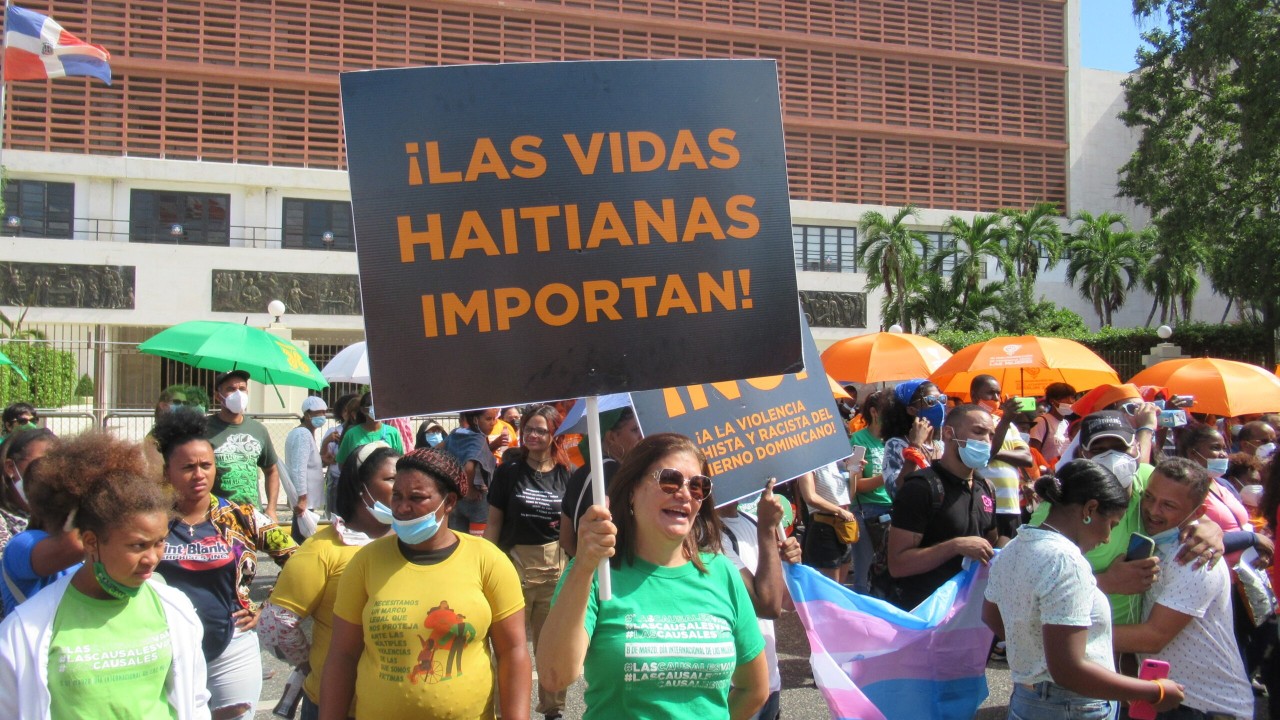
    Then, there are the children. It breaks my heart to see how children of Haitian parents in the Dominican Republic face barriers from the moment they are born. Many are denied birth certificates, a simple document that locks them out of further education and, later in life, from obtaining an identity card. No college, no executive work, no future. This systemic denial perpetuates a cycle of poverty and discrimination that follows them throughout their lives, all because of where they come from and the color of their skin.

    Article content
    Children of Haitian parents in the Dominican Republic face barriers from the moment they are born

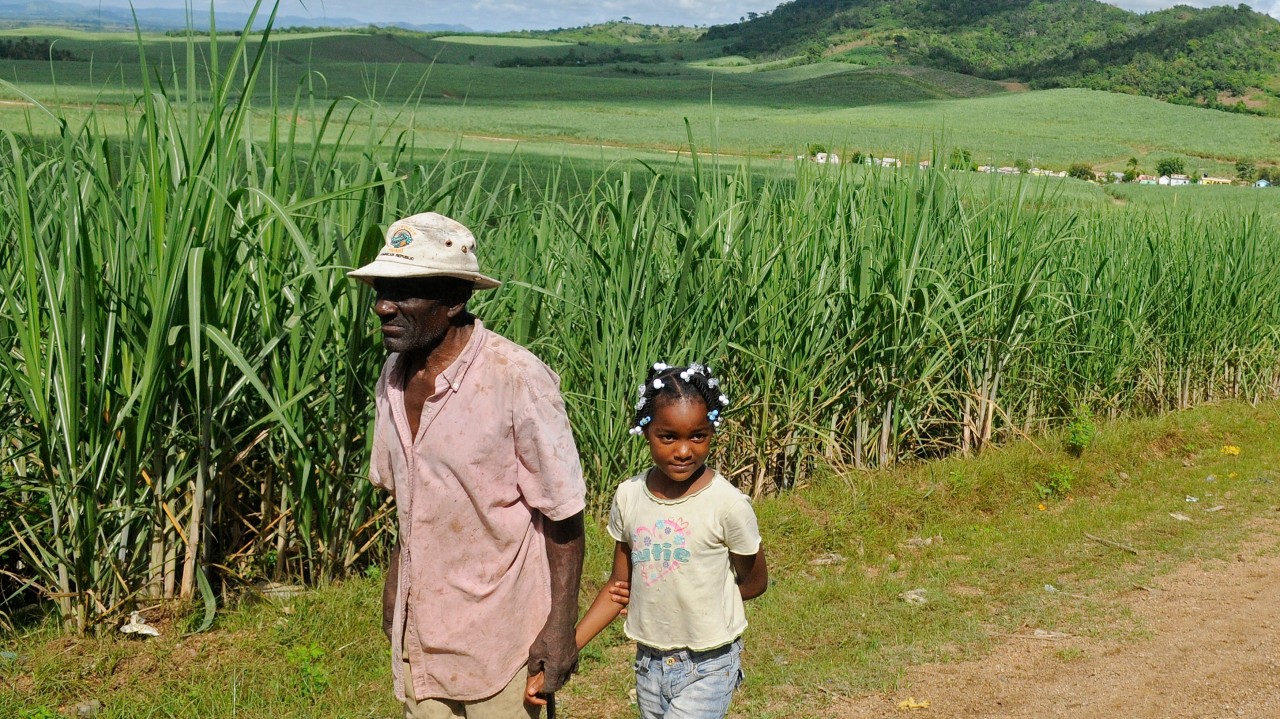
    Seeing the conditions under which many Haitians live and work in the Dominican Republic is devastating. Most earn less than 10,000 Dominican pesos a month, barely scraping by on less than 200 dollars. Others are subjected to forced labor on sugar plantations, rounded up at gunpoint, and made to work for little or no pay. Haitian parents, desperate to give their children a shot at a better future, sometimes arrange for Dominican families to “adopt” them. But this so-called adoption often turns into another form of servitude, child slavery, where these children work long hours without any chance to attend school or pursue their dreams.

    Access to healthcare is yet another uphill battle. Haitian immigrants and their descendants are frequently denied care, even when they are in the country legally. Pregnant Haitian women have been arrested during medical checkups, detained, and deported. Some have even given birth on hospital steps after being turned away in their time of need. This discrimination is most intense in remote communities and marginalized neighborhoods, where the lack of proper nutrition and healthcare is an everyday reality. It makes me question why we leave home if the situation in a new country is just as bad, if not worse because, on top of being limited in resources, we are harassed for simply existing.

    Article content
    Haitian immigrants and their descendants are frequently denied care

    As I write this, I am overwhelmed with mixed emotions—pride in Haiti’s history, sorrow for our present, and a fierce determination to change our future. The world needs to know what is happening to us, not just in the Dominican Republic but wherever we migrate. Haitians are not having a good time anywhere; we are Black, and we come from a poor country. Yet, I refuse to give up hope. I believe in our potential, and I believe we can change this narrative.

    We must continue to shed light on these injustices, advocate for our rights, and work towards a Haiti where every individual can live with dignity. I dream that more of us will return to rebuild our country, using our experiences abroad to fuel our drive for change. Gary Cornille is a powerful example—of what we can achieve if we unite and fight for our homeland. We may be scattered, but we are not lost. We are a resilient people, and our story is far from over.

  • Intra-Racial Divisions in the Dominican Republic: Uncovering Shared Histories

    Intra-Racial Divisions in the Dominican Republic: Uncovering Shared Histories

    The deep-rooted intra-racial divisions between Haiti and the Dominican Republic, highlight the shared history and persistent tensions shaped by colonialism and political propaganda. It emphasizes the need for education and solidarity to bridge gaps and promote racial equality in both nations.

    Growing up as a Haitian, my identity has always been intertwined with a rich, complex history that I carry with me wherever I go. As a proud Pan-African, I feel a deep connection to the shared struggles and triumphs of African descendants across the globe. One of the most poignant aspects of this journey has been understanding the intra-racial divisions between Haiti and the Dominican Republic, two nations sharing an island but separated by a tumultuous past and present.

    Haiti and the Dominican Republic share more than just an island; we share history, blood, and stories. My ancestors fought for Haiti’s independence first, a hard-won freedom that we then sought to extend to our Dominican neighbors. It was a time of hope and solidarity, but also of great sacrifice. Our president, Charles Rivière-Hérard, took the drastic step of closing all schools to focus solely on agriculture, aiming to quickly pay off the debt imposed by our colonizers for our freedom. While some Haitians argue that this was a mistake, it’s clear that the Dominicans did not appreciate the move, leading to a revolt and eventually allowing the Spanish to regain control.

    Article content
    In 1865 when Black Dominican rebels, with the help of Haiti, feared that Spain would reestablish slavery

    From our perspective, we sought freedom not just for ourselves but for all oppressed peoples. We extended a hand to the Dominicans, just as we did to other countries in South and Central America. But the Dominicans’ narrative is different. They saw us as invaders, as enslavers, and this misunderstanding or perhaps deliberate misinformation has fueled animosity between our peoples.

    The roots of this division can be traced back to Rafael Trujillo, a dictator whose reign from 1930 to 1952 left an indelible mark on Dominican-Haitian relations. Trujillo’s propaganda painted Haitians as enemies, culminating in the 1937 massacre known as “La Masacre del Perejil.” My grandparents spoke of this dark chapter with palpable pain, recounting how tens of thousands of Haitians were slaughtered on Trujillo’s orders. This massacre is seared into our collective memory, creating a legacy of fear and distrust that still lingers today.

    Article content
    Parsley Massacre Oct. 2nd, 1937 from Zinn Education Project

    Even now, when I visit the Dominican Republic, the weight of history is evident. I am treated with suspicion and hostility, while my white husband is met with warmth and respect. It is a painful reminder that my safety often hinges on his white privilege. I have to switch to English and downplay my Haitian identity to navigate these spaces safely, a tactic reminiscent of “code-switching” in the United States.

    Dominicans’ complex relationship with race, heavily influenced by a colonial past that favored Eurocentric identities, exacerbates this divide. Many Dominicans do not consider themselves black despite their African ancestry, opting instead to emphasize their Spanish or indigenous. This phenomenon, known as “blanqueamiento,” fosters a sense of superiority over those who openly embrace their African heritage.

    I recall a college friend from the Dominican Republic who lived just minutes from my home. Despite our similar skin tones, she insisted she was not black but “indígena.” It was only after moving to Spain that she proudly embraced her black identity, a testament to the pervasive and damaging effects of racial denial.

    Article content
    Black Dominicans asking for a change

    As I prepare to move to the Dominican Republic for a business opportunity, I do so with a mission. I aim to promote education about our shared history and the invaluable contributions of African descendants. I hope to foster a sense of solidarity by highlighting the interconnectedness of our histories. Supporting grassroots organizations that champion racial equality and the empowerment of black communities is crucial to this endeavor.

    As a proud black person and Pan-African, I embrace this challenge wholeheartedly. Next month, I plan to shed light on the plight of Haitians fleeing to the Dominican Republic, seeking refuge from violence and seeking better opportunities. The xenophobia they face is staggering, and I experience it firsthand every time I visit. My Creole and distinctly Haitian features mark me as an outsider, a target for prejudice.

    It is vital for the African diaspora to be aware of these issues. The denial of African heritage in the Dominican Republic leads to a lack of cultural representation and erasure of black history. This not only affects black Dominicans’ sense of pride and identity but also perpetuates division and inequality.

    Article content

    Haitians and Dominicans’ histories are deeply intertwined, and our futures are as well. We need to acknowledge and address these intra-racial divisions can pave the way for a more inclusive and equitable society. This is something that is happening in republic Dominicans, it also happens with the mulates in Haiti and many South Americans and Caribbean countries.

    Womenful Voice

  • Living in Color in the USA: Cultural-Racism Shock

    Living in Color in the USA: Cultural-Racism Shock

    Being black in America is like living with a target on your back. It’s a heavy burden, one that I carry every day, far from the shores of Haiti where I grew up. In Haiti, we knew racism existed, but it was a distant concept, something that happened “over there,” it wasn’t omnipresent—it wasn’t a constant measure of our worth. It wasn’t until I moved to the United States that I felt the full weight of it pressing down on me.

    Growing up in Haiti, racism was not the pervasive shadow it is here in the United States. We have our own struggles, our own battles to fight, but they are ours. We aren’t constantly reminded of our skin color or treated as though it defines our worth. In the United States, though, the story is different. Here, the system is designed to work against you if you’re black. It’s a system that makes you learn to cope with constant microaggressions and outright discrimination. But not everyone can cope, and not everyone should have to.

    Moving to the United States was an eye-opener. I grew up in an all-black country and lived in other places where my skin color wasn’t constantly under scrutiny. I’ve lived in Haiti, and Costa Rica, and spent time in 14 other countries, but none have been as obsessed with race as the United States. Here, you have to constantly identify your race, and at first, it was confusing. I didn’t understand why it mattered so much. But over time, I realized it’s ingrained in the culture to the point where it shapes your entire existence.

    Article content
    The 13th Amendment to the Constitution still allows slavery as a punishment

    One of the most jarring experiences was the stark difference in perceptions of global figures. In Haiti, we admired Cuba and Fidel Castro for their resilience and defiance. We saw Muammar Gaddafi as a leader who stood up against Western dominance. Yet, in the United States, these figures are vilified. The media spins narratives that serve the interests of the powerful, turning heroes into villains and ensuring that the United States perspective is the dominant one. It messes with your mind, making it hard to reconcile the different truths you’ve known.

    Another mind-blowing thing was Juneteenth considered just a day; shouldn’t it be America’s true Independence Day? Celebrating true freedom for all Americans? Instead, it’s overshadowed by July 4th, dismissing the pain inflicted on black Americans and their values in this country. Equally bewildering is the 13th Amendment to the Constitution, which still allows slavery as a punishment. It’s mind-boggling that in 2024, this remains in the constitution without shame or urgency for change. This provision perpetuates systemic racism and needs to be addressed urgently. It’s a stark reminder of systemic racism’s enduring grip.

    Racism here isn’t just about the color of your skin; it’s about power and who controls the narrative. The closer you are to whiteness, the easier your life becomes. Media, including social media, reinforces this daily, painting black people with a broad brush of stereotypes and prejudices. Compassion, love, and understanding are often absent from these portrayals. Instead, the focus is on reinforcing negative beliefs.

    In my work experiences, I’ve felt disrespected, undervalued, unwanted, and used. As a black woman, I know we are among the most educated in the country because we’ve had to work twice as hard to be seen and heard. Yet, we’re still pushed to conform to white standards of beauty and behavior. Many black women around me wear wigs, straighten their hair, and even bleach their skin to be accepted. I choose to wear a headwrap or my locks everywhere I go, celebrating the beauty of our culture and the resilience of our natural hair.

    Article content
    Our hair can be straightened, curled, braided, and stay in its natural state, defying gravity.

    When I try to explain myself, I often meet resistance from white people. They become defensive and unwilling to listen, understand, or make changes. Even those who want to support us fear being excluded by their own families and friends. Speaking up makes black people seem dramatic or problematic, reinforcing harmful stereotypes. White people often draw on their ancestors’ beliefs to push back against our experiences, using these racist ideas to justify their resistance. It’s exhausting to constantly explain my perspective, to teach so many white people about my way of thinking and seeing the world.

    I love my country, but in Haiti, despite being a black country, we’re complacent with a white system, I do not know why we use their system to manage our country. And we often excuse the actions of white people as just “their way of thinking,” but we need to start asserting our own perspectives. We must push back and demand respect for our way of thinking. “Their way of thinking” may have been passed down by our ancestors who did fight the whites, but I bet they had to choose some battles. Now, we do not have to fight for freedom from enslavement; we have to fight for respect and consideration. We can accept people for who they are, but we do not have to accept their disrespect and misunderstanding of us.

    Article content
    Every black person in America should disregard the lack of empathy and understanding directed toward us.

    I’m leaving the United States to focus on my well-being. Here, there’s always something negative to deal with, a constant struggle to remember who we are amid the noise of who we are told to be. It’s time to reclaim my light and be the person I want to be in this world—without compromise.

    Every black person in America deserves to be seen and heard, disregarding the lack of empathy and understanding directed toward us.

    Womenful Voice

  • A Country of Legal Monogamy and Normalized Polygamy

    A Country of Legal Monogamy and Normalized Polygamy

    I often find myself reflecting on the system of relationships in Haiti, a country where legal monogamy is the standard, but normalized polygamy persists. This disparity creates a reality that doesn’t work for women, children, or even men. When monogamy is enshrined in law but not reinforced, it affects everyone involved.

    Haiti has made polygamy illegal, but this law is not enforced. Women are taught that men can’t be monogamous because supposedly, they are not made for it, while women supposedly are. As a result, men realize that women accept this attitude and begin to consider cheating as normal, equating it to polygamy. However, true polygamy involves everyone in the relationship agreeing and establishing a system to make it work. In Haiti, though, normalized polygamy means men have multiple families, cannot take care of all their children, and create more poverty, leading to many single mothers who were taught they could rely on their husbands or the fathers of their children.

    Because of the lack of opportunities, men cannot support so many kids in a country, opportunities are scarce—like having lemons but no water or sugar to make lemonade. Many men realize that mothers are doing whatever they can to take care of their children, even if it means sending them to school or providing one meal a day. One man I talked to said that if the woman could do the work, it would be less of a burden on him. Another told me that since women carry the children, they are the only ones sure the kids are theirs, while men can’t be certain so children only have mothers.

    Article content
    Before we were Haitians, we were Africans!

    Polygamy in Haiti has roots in our ancestors, but colonization imposed monogamy without proper systems, information, or enforcement. Polygamy itself isn’t wrong, but cheating is. Every system has flaws, and women should have the choice to decide if they want to be in a polygamous relationship. Unfortunately, many women are forced to share their husbands due to centuries of improperly established polygamy in the country.

    Women often feel they can’t leave their relationships because of their children; they want their kids to have their fathers around. Some men, forced into marriage or unwilling to stay, may become physically violent out of frustration. During an interview in the community, a young man told me he doesn’t discuss these matters with his wife, as she respects the boundaries to avoid trouble. This made me wonder why there should be boundaries in a relationship. He said it’s better not to confirm and avoid problems. This indicates that women might not actually, want to be in a polygamous relationship but feel they have no choice due to their circumstances.

    The responsibility of raising children should be shared, yet many people I’ve interviewed say their mothers did most of the work or all the work. No child can be born without a father, yet the burden often falls solely on the mother. We need a system of honesty because Haiti is a nation of African descendants where polygamy was the norm. The Western imposition of monogamy, without proper reinforcement, is causing chaos in the community.

    Article content
    Polygamy and monogamy have their flaws!

    Both monogamy and polygamy can work, but they need to be based on open honesty. Some women are comfortable with polygamy, but the lack of honesty and societal pressure create problems. Other societies function well with open polygamous relationships based on respect and mutual goals. Monogamy also works, but staying with one person is a challenge for Haitian men, and choosing the wrong person can make it as difficult as a monogamous relationship.

    We need to educate men and women, boys and girls. As Esther Nakajjigo says, the way we raise girls and boys differently is a form of discrimination. Both parents have roles to play. It all starts at home, with honesty as the key. Humanity needs honesty and compassion. We need a society where women have the information to be decisive and advocate for themselves.

    Happy Haitian Month!

    Womenful Voice

  • Embracing Haiti: A Call for Cultural Understanding and Self-Determination

    Embracing Haiti: A Call for Cultural Understanding and Self-Determination

    A return to self-determination and communal values. The detrimental impact of foreign interference and the importance of Haitians coming together to reshape their own future.

    Haiti! A land of rich history, vibrant culture, and resilient people, Haiti stands as a beacon of hope and strength in the face of adversity. But alongside its beauty lies a struggle—a struggle not just against external forces but against the imposition of foreign systems that fail to grasp the essence of what Haiti truly is.

    Haiti, the first black republic, holds a unique position in history. Its story is a tapestry woven with threads of triumph and tribulation, courage and resilience. Yet, despite its distinctiveness, Haiti finds itself ensnared in a web of Western ideologies and systems that do not align with its communal essence.

    As someone deeply rooted in Haitian culture, I can’t help but feel the weight of frustration at the continued imposition of foreign systems upon our land. The Western model of governance, whether capitalist or communist, does not fit Haiti’s communal spirit. We are not a country driven solely by profit margins or political ideologies. Instead, we thrive on community bonds, collective efforts, and a shared sense of identity.

    Article content
    Our house is also okay; it will never look like a Western house!

    But time and again, we see attempts to mold Haiti into a shape it was never meant to take. Outsiders, with their well-meaning but misguided intentions, seek to impose solutions without understanding the complexities of our culture and history. The result? A system that not only fails to serve the people but actively works against them.

    Take, for instance, the interference of foreign powers in our affairs. From the Wilson Administration’s intervention in the early 20th century to recent instances of political manipulation, Haiti has long been subject to external control. The infamous seizure of Haiti’s gold reserve in 1914 stands as a stark reminder of this history of exploitation.

    Article content
    The United States took control of Haiti’s gold reserve but failed to return it.

    But it’s not just about the past; it’s about the present, too. Our leaders, caught in a web of foreign influence and self-interest, often prioritize the demands of external powers over the needs of their own people. The result? A fractured society rife with poverty, corruption, and violence.

    Article content
    Studies found that Haiti’s presidents failed the country

    The solution, however, lies not in further external intervention or brute force. It lies in a return to our roots, a reclamation of our identity, and a reimagining of our future. Haiti needs a system that is by the people, for the people—a system that reflects our values, traditions, and aspirations.

    But this change cannot come from external forces. It must start from within—from the hearts and minds of the Haitian people themselves. We must come together as a community to envision and enact the change we wish to see. Our leaders must be held accountable, not to foreign powers, but to the very people they serve.

    And amidst the chaos and turmoil, there is hope. The diaspora, awakened to the plight of their homeland, stands ready to lend support and solidarity. We know we can build a Haiti that honors its past, embraces its present, and dreams of a brighter future.

    Article content
    Ayiti pap peri!

    So, we will not succumb to despair or resignation. We will rise united in our determination to reclaim our sovereignty, our dignity, and our future. We will be the architects of our own destiny, the guardians of our own dreams.

    The diaspora speaks English, and we will be the voice of our people. The media will never understand. Each country is unique, like each human being, with flaws and strengths. And our STRENGHT is COMMUNITY.

    Womenful Voice

  • Beautiful Haiti we do not see on TV

    Beautiful Haiti we do not see on TV

    Dive into the lived experience of growing up as a Haitian girl, highlighting the societal pressures and gender expectations imposed from a young age. The need to break free from these norms, empower daughters, educate sons, and advocate for gender equality dictate the future of Haiti.

    Growing up in Haiti, I was surrounded by a culture that ingrained in young girls the idea of being groomed solely for motherhood and wifehood, without emphasis on self-care or personal empowerment. It’s like being caught in this whirlwind of expectations from every direction, especially if you’re a girl. You’re expected to fit into this neat little box of what society thinks a woman should be. From a young age, I was taught that my worth was tied to my ability to cook, clean, iron, and do laundry – skills deemed essential for fulfilling the role of a housewife. But seriously, who made these rules?

    Despite my parents’ belief in education, societal norms perpetuated the notion that success for a woman equated to marriage and motherhood. I find it very sad because, at a young age, we are categorizing our young girls, affecting their self-esteem. I believe any labeling and categorizing is a type of discrimination.

    Article content
    Haitian girls start in the kitchen as early as four years old.

    I grew up with four boys, and I refused to let society box me into the girl category for what I can and cannot do. As a young girl, I didn’t understand why I was so rebellious, feeling this burning urge to prove that I could do anything they could. I did not like it when they told me I could not do something that I clearly could do. I was always offended. It was like this constant battle against the norm, this idea that because I was a girl, there were just some things I couldn’t do. Why? Could you tell me how that was proven? I attempted to do something but failed; for some, I stopped trying, and for others, I proved them wrong. I am still being told that I act like a man; some tell me that I think I am a man. I learned at a young age that I have to fight for what I want, even inside my home, where I was supposed to feel safe.

    And it’s not just about me. Today, it’s disheartening to hear stories from other women who grew up with me bought into this narrative, only to find themselves trapped in abusive relationships, mirroring the patterns they witnessed in their peers and family. Can you imagine the weight of such expectations? What are we truly teaching our daughters? What about their dreams? Submission allows oppression! Still today, empowerment for young girls remains elusive in Haiti. Women are stuck in abusive relationships because they were taught that submission is just part of being a good wife. I recommend that mothers and fathers foster curiosity, critical thinking, and decision-making skills instead of instilling a sense of unquestioning obedience in young girls. This won’t take your daughter far! In the US, in 2021, 34% of women were killed by their intimate partner. Can you imagine Haiti, a lawless land? There is no data for that. Father! What about your young girls’ ambitions? And mothers! It’s like we’re selling ourselves short before we even get started.

    Article content
    Haitian women speak about the unbearable violence in a lawless country.

    This cultural conditioning often leads to women shouldering the burden of childcare and household finances and chores while their partners squander resources (time and money) on extramarital affairs. If you look around Haiti, you will see it everywhere. Many women in my community, including women on both sides of my family, endure these circumstances due to religious, societal, and familial pressures despite knowing they could survive independently. It’s a mental block we perpetuate at a young age, restricting the potential of women and reinforcing harmful gender dynamics.

    In Haiti, we teach our daughters that it is okay for our daughters to accept extramarital affairs in their marriage because all men are like that. When I think of the way many moms raise their daughters, I ask them to think of their daughters in a situation where she is taking care of their husbands and kids while their husband is still not taking care of them emotionally and financially or helping with the household chores. For me, this sounds like you provided a slave to a foreigner because he is a man. I call that man privilege. The “strong women” syndrome is a real issue in Haiti, and our mothers pass those things on to their daughters. Reinforcing polygamy, while it is illegal in Haiti, causes lots of single mothers who are normally teenagers because they are easy to manipulate and do not need lots of money to be satisfied since their parents take care of lots for them. Who’s teaching our daughters that they deserve better? Who’s teaching our sons to respect their partners as equals?

    Article content
    Professional Haitian women at the Haitian Ladies Network

    Another aspect of this control manifests in parents dictating their daughters’ movements and interactions under the guise of protection. Yeah, sure, parents want to keep their daughters safe, but when does it become suffocating? When does it start preventing them from living their lives and making their own choices? This overprotection leaves young girls vulnerable to exploitation and unable to discern predatory behavior. When instances of rape occur, the blame is unfairly placed on the victim, further exacerbating feelings of guilt and self-blame. Parents must take proactive steps to empower their daughters and educate their sons on consent and respect.

    And let’s talk about politics for a sec – have you seen the presidential board? All men. Not a single woman in sight. Our daughters need to feel they can take leadership positions, that they need to have their dreams, and that the kid and husband idea will come along if they ever desire it. How are we supposed to progress as a society when more than half of our population isn’t even represented? Who is going to advocate for women’s needs and struggles? If women are not empowered, they will never join the table of discussion, and we are squandering 56% of human potential in Haiti. Haiti cannot afford this either.

    Article content
    Haiti Presidential Council 2024

    It’s International Women’s Month, and I’m calling on all the moms out there to break free from these outdated norms. Let’s raise our daughters to be strong, independent women who know their worth. This is a way to teach self-care, self-acceptance, and self-esteem to our daughters. And let’s raise our sons to be allies, not oppressors. Empowerment should begin at home, shaping daughters into independent, resilient individuals with strong mental health.

    Because it’s not just about women – it’s about everyone. We’re all trapped in this patriarchal system, men included, who are burdened with unrealistic expectations and limited roles in this modern world. Perpetuating the belief that certain tasks are “women’s work,” we diminish the potential of both genders. It’s time to tear it down and build something better. A future where everyone can thrive, regardless of their gender. Who’s with me?

    Womenful Voice

  • Haiti’s Cry for Its Ancestors’ Sacrifices: A Reflection on Past Trauma and Current Concerns

    Haiti’s Cry for Its Ancestors’ Sacrifices: A Reflection on Past Trauma and Current Concerns

    As we near the end of Black History Month, I find myself compelled to share a poignant narrative of the current plight facing Haiti, a nation embroiled in a cycle of political turmoil and external interventions. In this deeply personal reflection, I invite you to journey with me through the lens of my own experiences and observations as we delve into the harsh realities that my homeland faces.

    Haiti has not seen an election for eight years, a situation both unprecedented and unsettling. Prime Minister Ariel, who was supposed to oversee elections two years ago, still leads the country amidst a silence on electoral plans. The last semblance of the democratic process was marred by tragedy, with the assassination of President Jovenel Moïse in 2021 because he was revealing fissures of corruption and instability within our government. Now, under the leadership of Prime Minister Ariel, promises of elections remain unfulfilled, leaving the Haitian populace disillusioned, disheartened, and hungry.

    Article content
    Last Haitian president

    Amidst this vacuum of governance, gangs have seized control, plunging our streets into chaos and fear. Prime Minister Ariel’s call for international intervention evokes unsettling memories of past experiences, particularly the presence of MINUSTAH, whose legacy haunts us still. I cannot forget the devastating toll of cholera, a disease introduced by peacekeeping forces, claiming the lives of cherished individuals like Annie, a bright soul lost to us at just fifteen. The tragic irony of a mission meant to bring peace unleashing such suffering remains etched in my memory. It is the way that Cholera was spread that still worried me. The peacekeepers contaminated a tributary of the Artibonite River with its wastewater, where people drink water and wash their clothes, and cholera spread rapidly into the country.

    But it was not only disease that MINUSTAH brought; their presence was tainted by cultural ignorance and misconduct. The disrespect shown towards our customs, like the stealing of goats, reflects a fundamental failure to understand our culture and engage with our community. Moreover, the pervasive issue of rape during MINUSTAH’s tenure underscores the urgency of empowering local institutions rather than relying on external forces. What will be different this time? What are the processes and procedures put in place to prevent history from repeating itself?

    Article content
    The impact of our last international intervention!

    I find myself questioning the logic of pouring resources into international interventions that yield little sustainable impact; I see it as a waste of resources. Instead, why not invest in strengthening our police force, equipping them with the tools and training necessary to address internal challenges and provide fair pay? Do we need a troop for that? The population wants to know how long these forces will remain in the country. Sustainability should not be an afterthought but a guiding principle in our rebuilding of Haiti.

    Article content
    The community knows what they have, what they need, and what they can do!

    The current intervention path seems to reinforce a system that lacks a profound understanding of Haiti’s rich culture, history, and the enduring pain of our ancestors. The silence of the government, seemingly managed by an American Envoy, is a cause for concern, raising fears of increased trauma and loss for the Haitian people. Last time we checked, intervention has not been good for our country.

    The current trajectory, with an American Envoy at the helm, feels like a betrayal of our autonomy, cultural heritage, and the sacrifices of our ancestors. What do Americans know about Haitian culture? Based on TV alone tells us they don’t understand anything about us. We are an independent country, the first black country that defeated one of the biggest armies that ever existed. Why does America feel the need to take over our government? Things have gotten worse since the envoy has taken over, and most of the population knows little about the members, who are all white Americans.

    Article content
    Haitian people in the capital are desperate for a better life.

    The voices of Haitians in communities like Ouanaminthe echo with apprehension, fearing the reinforcement of a system that has failed them time and again. The specter of brutality looms large as the arrival of foreign troops evokes painful memories of past traumas.

    Article content
    5 years of MINUSTAH was 5 years of abuse and oppression

    As we navigate these uncertain times, the resilience of the Haitian spirit endures. Yet, there is a palpable sense of apprehension, a fear that the intervention we hoped would bring salvation may instead perpetuate cycles of violence and oppression. With bated breath, we are left to ponder the uncertain path ahead, praying that our collective resilience will guide us through the darkness.

    In the face of adversity, the Haitian people have always found strength in solidarity, drawing upon the rich tapestry of our history to forge a path toward a brighter tomorrow. Our independence is the beginning of humanity and a tool to remind us that black people are as equal as white people.

    Article content
    220 years of independence!

    Let us heed the lessons of the past, advocating for sustainable solutions that empower our communities and honor the inherent dignity of every Haitian life. For in our collective struggle lies the promise of a reborn, resilient, and unyielding Haiti in the face of adversity.

    #haiti #white #Colonialism  #AntiRacism #Justice #WhiteSupremacy #haitinews #BHM #Humanity #NeoColonialism #CompleteLiberation #DiversityEquityInclusion #GlobalAntiBlackness #Humanity #peopleInNeed #EndSuffering #HopeForTomorrow #unitednations #HumanitarianCrisis #ChildhoodLost #WarTorncountry #PeaceForHaiti #ConflictZone #livesUnderAttack

    Womenful Voice