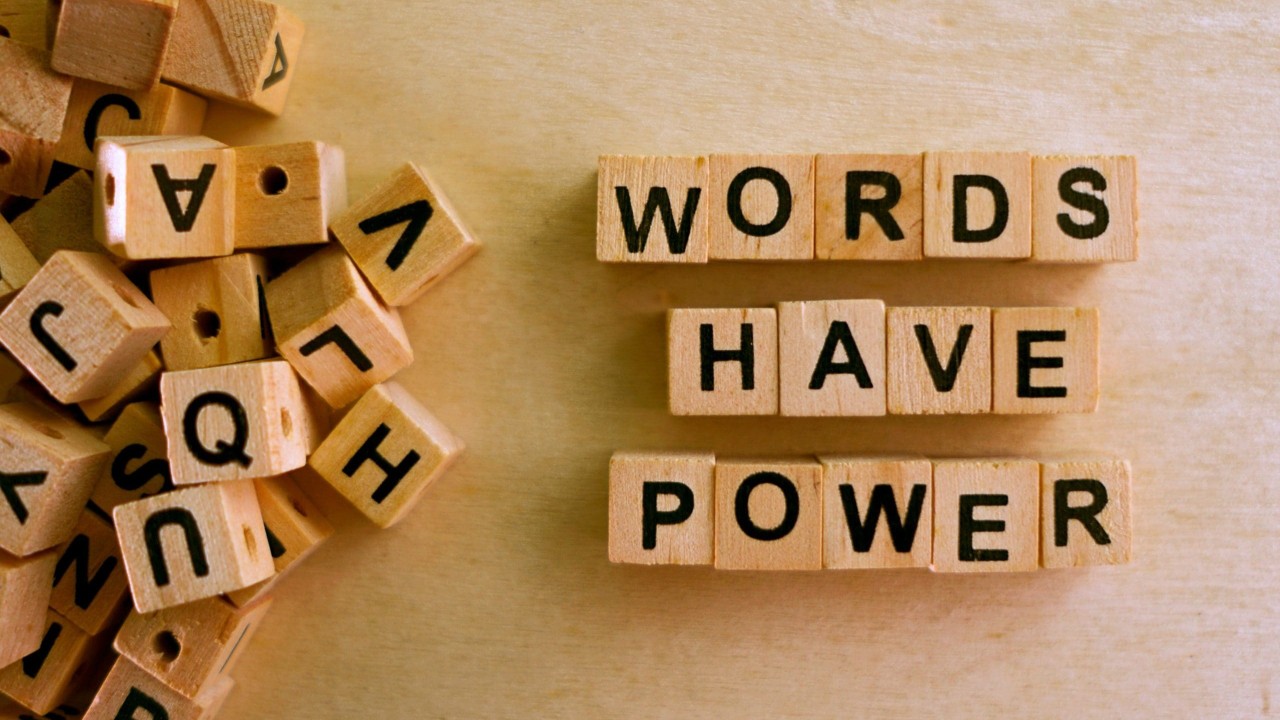
Language has been systematically weaponized since colonial times to create hierarchies of power and internalized racism, as seen in the privileging of French over Creole in Haiti. This global issue perpetuates class and racial divisions, yet every language holds its own inherent beauty and value, and reclaiming marginalized tongues is a vital act of decolonization.
I have always known that language is more than just words. It’s a living, breathing force that carries the weight of history, class, and power. For as long as I can remember, I understood that the words you choose, and the accent that colors them, become a quick judgment of your value, your education, and your very right to belong.
I grew up in Haiti, where this truth was a daily lesson. In the hallways of my school, your intelligence wasn’t measured by your ideas, but by your mastery of French. To speak French flawlessly was to wear an invisible crown. It signaled that you came from a “good” family, that you were educated, and that you had value.
But I also saw the other side of that coin. I witnessed, and sometimes experienced, the sharp sting of ridicule for a single grammatical error. A misplaced conjugation or a misgendered noun could follow you for years, a brand that marked you as “less than.” It didn’t matter if you were a brilliant artist or a gifted mathematician; that one linguistic failure could overshadow it all. This system, I learned, disproportionately affected Black children from poorer families. We were fighting a battle on a field tilted against us from the start.
This is where the painful, complex history of my island came into sharp focus. The mastery of French was often a trait of the mulatto elite, those with lighter skin, sometimes with green or hazel eyes, a haunting legacy of colonial rape. Yet, many in this class wore their European features and their perfect French as a badge of superiority, a way to deny their Haitianness and cling to the bloodline of the very slave masters who oppressed our ancestors. It was, and still is, a heartbreaking internalization of colonial hierarchy. And our education system, by continuing to teach primarily in French, perpetuates this cycle, locking countless brilliant minds out of a quality education simply for speaking the language of their hearts: Haitian Creole.

For years, I thought this was just our Haitian problem. But then I found the words of the brilliant Gloria Anzaldúa, who wrote, “Ethnic identity is twin skin to linguistic identity – I am my language.” Reading her felt like someone had reached into my soul. She articulated the deep, intrinsic connection between who we are and the words we speak. When you are made to feel ashamed of your mother tongue, it is a direct attack on your soul, your family, and your history. Growing up feeling proudly Haitian and Black, yet being subtly and overtly taught that the language of my home was inferior, created a deep fracture in my self-esteem. It made me feel like I had to constantly prove I belonged in rooms built to exclude me.
Please don’t misunderstand me, I love languages. I am passionately in love with them. I speak four, and each one has felt like receiving a new key to a different part of the human experience. They have been my greatest allies, allowing me to connect with people from Costa Rica to France. But this love is also what makes the weaponization of language so painful.
I’ll never forget my time in Brazil, where I didn’t speak Portuguese. I resorted to “Portuñol,” a clumsy but earnest mix of Spanish and Portuguese. While it helped me get by, the frustration of not being able to express my full self, to understand the nuances of jokes, or to dive deep into conversations with the people I so desperately wanted to learn from, was a profound reminder of the power of true fluency. It’s a power that is systematically denied to so many.
What I adore about Spanish, for instance, is its beautiful refusal to be monolithic. Every country I visit adds a new flavor, a new rhythm, a new history to the language. It’s a living tapestry of colonization and resistance, a fact made even clearer when I learned that in Spain, they don’t speak “español,” but castellano; a direct link to the kingdom of Castile that spread its rule and its tongue across the ocean.
This all brought me back to the sharp critiques of thinkers like Frantz Fanon. He masterfully exposed the absurdity of the colonized who return from France, putting on airs and speaking with a perfected accent, believing it makes them superior. I saw this same character, this same internalized racism, reflected in the faces of the mulatto elites and many other Haitians on the island. It’s a global performance of self-denial.

This is not an accident. It is by design. As scholars like Ann Laura Stoler have explored in works about colonial power, language was a primary tool of control. The slave masters knew that to dominate a people, you must first dominate their minds. They forbade our ancestors from speaking their native tongues and forced them to learn the master’s language. The goal was never to understand us, but to ensure we understood them, their commands, their laws, their so-called superiority. It was a way to strip us of our history and force us into their narrative.
The great Aimé Césaire called this out brilliantly, critiquing the hollow notion of a “civilization” built on such brutal foundations. What kind of civilization requires the cultural death of another as its price of entry?
This history is why, even as I speak French fluently, a part of me feels a deep sense of shame. I feel the ghost of colonization in my mouth. I feel the weight of my ancestors, who had no choice but to let go of their mother tongues, blending them with French to create something new, something resilient and beautiful: our Creole. This is the very reason I am unashamedly, fiercely teaching my son Creole. It is an act of love and resistance.
I often think of the Creole that was once spoken in Louisiana, and my heart aches that more people didn’t keep it alive. There is a profound beauty in these languages born of struggle.
I learned Spanish in Costa Rica and English in the United States, but French and Creole were the inheritance from my home. My parents, as Black Haitians, drilled French into us because they knew it was the key that could unlock the doors to expensive, prestigious schools. It was a pragmatic, loving act of survival. Yet, even with the “right” language, our skin color often placed us in uncomfortable situations with the mulatto class, a constant reminder that for them, the goalposts could always move.
I’ve heard from many friends who visited France, if you don’t speak French with a certain fluency, you are met with dismissal. The irony is thick. We, in Haiti, often romanticize Spanish for its passion, while the outside world romanticizes French for its sophistication. We are all complicit in this global hierarchy of language.
But I am choosing a different path. I am choosing to see the unique beauty and power in every language. I am choosing to honor the resistance woven into the fabric of my Creole. My journey with language has been one of pain, discovery, and ultimately, liberation. It has taught me that while language can be a weapon of division, in our hands, it can also become our most powerful tool of reclamation and pride. Our voices, in all their diverse and beautiful tongues, deserve to be heard without shame.
Womenful Voice International Commission for Equity & Peace (ICEP)
Leave a Reply